
What You Need to Know About Kitchen Colours
▶ Watch the video, or read on below
In this article
How colour changes the feel of a kitchen, the 60-30-10 rule, and five colour schemes that work, plus how Schüller use colour when they design new kitchen ranges.
In this article 5 sections · 3 min read
Colours are essential in life… They influence our mood & how we feel, especially in the kitchen which is the centre point of every home.
A good combination of kitchen colours in the scheme of your decoration can make your kitchen look livelier and more appealing. However mismatched colour schemes can ruin your décor.
How Colour Changes the Feel of a Kitchen
Colour can influence the mood of a room. For example, studies have shown that red can quicken the pulse and breathing rate, as well as increase appetite. Yellow, especially soft yellows can make people feel happier.
When used as an accent bright yellow can attract attention and brighten up a kitchen. You can also use colour to influence how large or small a kitchen can feel.

Why White Stays Popular

With kitchen colour taking on more importance, many manufacturers of cabinets, appliances, flooring and countertops are offering the consumer more choices in colours.
Kitchen colour schemes have come and gone over the years. Some kitchen colour schemes have remained popular over time.
White as a kitchen colour remains a popular choice because it has a clean look. One disadvantage of an all-white kitchen is that it can have a sterile and cold look and feel. That’s why white is usually accented with one other colour such as blue. Also design elements such as a light colored wood shelving, wall panels or flooring can make a kitchen seem warmer. It is considered a good idea to select one colour as the overall or base colour and select one or two accent colours.

The 60-30-10 Rule
You can feel safe selecting just about any colour for your kitchen by following some important guidelines for using different kitchen colour schemes:

It is considered a good idea in using colour in a room to have a 60-30-10 split between three colours;
- 60% representing the main or dominant colour, probably on the walls or cabinets.
- 30% of a secondary colour used in the flooring or rugs, as well as window treatments.
- 10% for accents such as, dishes, artwork, pillows and other soft items.
Five Colour Schemes That Work
Monochromatic
Monochromatic colour scheme is noted for only the use of one colour. To create more variety you would use various tints, tones and shades of that colour.
Complementary
Complementary colour scheme uses two colours placed opposite to each other on the colour wheel. This scheme is quite intense and brings a more dramatic touch and energy to home décor.

Analogous
Analogous colour scheme includes three hues placed adjacent to each other on the colour wheel with either warm colours or cool colours in combination, such as yellow and green, blue and violet, or red and orange. Kitchens generally wouldn’t be the type of room where this type of colour scheme would be used. This colour scheme would be better for more informal areas of the home, such as family rooms, dens and bedrooms or where one would be looking for rest and recovery from the activities of the day.
Neutral
Neutral colours include taupe, tan, black, white, cream, and shades of grey. Neutral colours can be paired with almost any colour as an accent. Because your cabinets make up most of the expense of kitchen decorating it would be best to choose a style in a more neutral finish. This also applies for countertops and flooring.
Inspired by Nature
A good decorating scheme is to emulate the colour schemes found in nature, such as sky blue or the various shades of green or earth brown or light or pale yellow. Light can also be an important element in emphasizing the colours and can bring about different shades and views of the colour based on varying intensity.
Watch the clip
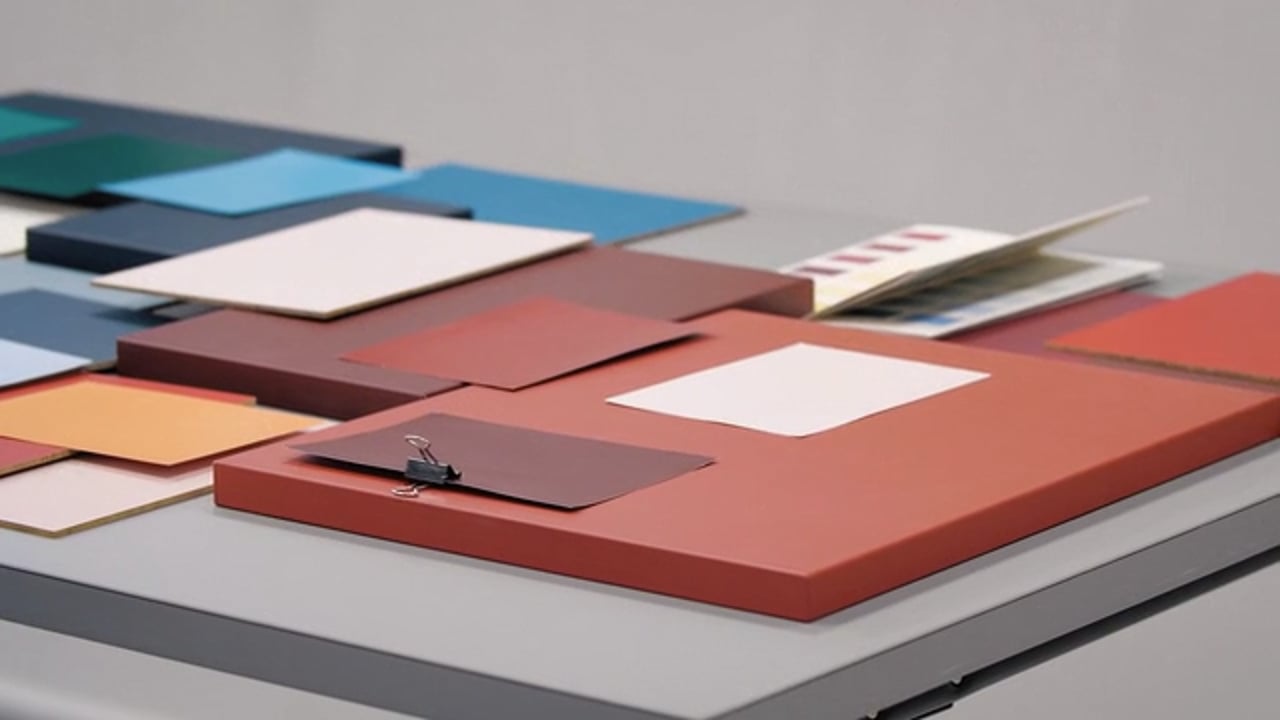
Here’s how Schüller use colour when they develop a new kitchen range.
Questions people ask
Frequently Asked Questions
What You Need to Know About Kitchen Colours - FAQs
How many colours should a kitchen have?
Three is a good rule: a main colour, a secondary colour and a small accent. That’s the 60-30-10 split.
Do dark kitchens make a room feel smaller?
They can in a small, dark room. Dark lower units with lighter wall units or walls keep the drama without closing the space in.
What is the most popular kitchen colour right now?
Warm neutrals and soft greens are the big sellers, often paired with wood. White is still popular, but it’s usually warmed up with timber or a darker accent.


Planning a new kitchen?
Come and talk it through with one of our designers in the Cardiff showroom, or get a guide price in two minutes.


